 Nmia Gaming
 5 Major Features to get to know Eiyuden Chronicle: Hundred Heroes for all you Suikoden Fans
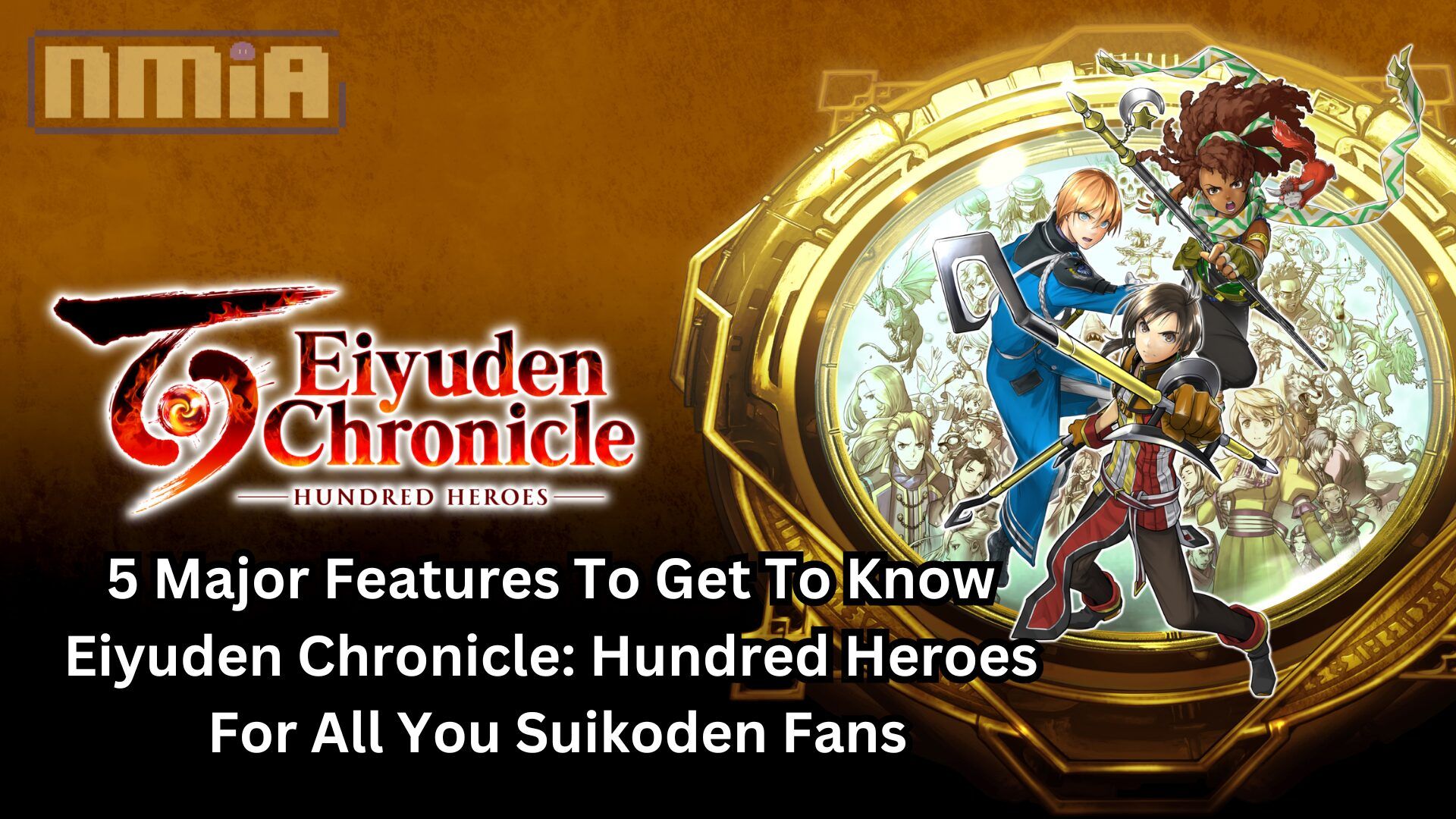
Developed by Rabbit and Bear Studios, a game company formed by the original production team behind the classic JRPG “Suikoden,” and published by 505 Games, the latest JRPG title Eiyuden Chronicle: Hundred Heroes has an impressive pedigree and was successfully released on the 23rd of April. In fact, the Hundred Heroes project has been in [...]
Developed by Rabbit and Bear Studios, a game company formed by the original production team behind the classic JRPG "Suikoden," and published by 505 Games, the latest JRPG title Eiyuden Chronicle: Hundred Heroes has an impressive pedigree and was successfully released on the 23rd of April.
In fact, the Hundred Heroes project has been in development for some time, having dashed past its crowdfunding goals in its first day.The studio even effectively Beta-tested their ideas for Hundred Heros with Eiyuden Chronicle: Rising as a platform for their ideas/ Now, nearly two years since the initial release of Rising, fans' long-awaited true Eiyuden Chronicle has finally arrived.
What makes this game, which was so important in the gaming community, particularly among fans of Japanese role-playing games, such a significant release in 2024? What makes Eiyuden Chronicle: Hundred Heroes so special? If you're a fan of JRPGs and are interested in playing a delightful new JRPG, then you shouldn't miss out on the following overview of the 5 key game features of Hundred Heroes that I'm about to introduce to you. At the very least, you can see if Hundred Heroes is right for you.
※ If you want to thoroughly understand whether this retro classic JRPG is suitable for you, our Eiyuden Chronicle: Hundred Heroes review is ready for you

Before discussing this game, let's take a moment to commemorate the legendary chief designer of this game and the father of the "Suikoden" series, Yoshitaka Murayama. He passed away unexpectedly in February of this year, unable to witness the release of Eiyuden Chronicle: Hundred Heroes. This game serves as the legacy of a true titan in the JRPG scene.

Eiyuden Chronicle: Hundred Heroes is literally the “Shin” spiritual successor to Suikoden
If we were to sum up what kind of game Eiyuden Chronicle: Hundred Heroes is, it's hard not to evoke memories of 1995's Suikoden. I believe a significant portion of players are eagerly anticipating this game for that very reason. It's very much a modern reimagining of Suikoden, designed by former members of the Suikoden devs team with modern technology, featuring a new protagonist and world.
The character designs adopt a nostalgic pixel art style, while all other elements and environments are presented in full 3D. The main story is fully voiced, although it's a bit disappointing that the character skits in the lower right corner of the screen are not voiced. It can be said that fans who have played the classic Suikoden games in the past will feel right at home when they enter Eiyuden Chronicle: Hundred Heroes.

The plot of Hundred Heroes can be considered a very traditional heroic tale. The game features three main protagonists: Nowa from the Alliance, Seign from the Empire, and Marisa from the Guardians. While there are moments in the game where Seign or Marisa take on the role of the team leader, they don't dominate the main storyline. The narrative predominantly revolves around Nowa driving the story forward.
Without spoiling too much, I believe the story of Hundred Heroes is as essential as its combat. Similar to the combat, you won't be profoundly impacted by the story's content, instead, what's remarkable about it is how it's presented. The story isn't verbose or overly descriptive; instead, it's presented in a series of small-scale narratives, introducing key terms, characters, and plot points in an easy-to-follow manner. This approach is perfect for those who prefer stories that unfold through action.

This game incorporates the most prominent feature of Suikoden, which is the player's ability to build everything. It's not just about assembling combat members; once players progress to a certain point in the early stages of the story, they will have a player base that serves as a headquarters.
Over ninety percent of the NPCs in the base need to be personally sought out and recruited by the player throughout the story. The estimated completion time for a first playthrough of the game is around 50 hours. However, players will notice that there are many hidden characters or elements to discover in the late game. Therefore, to achieve full completion with all elements, it might take around 80 hours, as mentioned by the producer in a previous interview.
While Hundred Heroes may not be a game that leaves you scratching your head with difficulty, its design as a retro classic game does indeed incorporate many nostalgic mechanics of old-school JRPGs, which might be daunting for new players.
Naturally, adapting to the game's various classic mechanics and gameplay styles requires a significant investment of time from players. However, the game's gameplay loop expands its complexity from the basics, so as players begin to accept and adapt to these various outdated mechanics and gameplay elements, I believe you'll come to deeply appreciate the charm of this retro classic JRPG and understand why so many people are eagerly anticipating this spiritual successor.

Over 100 heroes await your search and recruitment in Eiyuden Chronicle: Hundred Heroes
You thought "Hundred Heroes" was just for flavor? Of course not. As the name "Hundred Heroes" suggests, the number of recruitable characters is literally in the triple digits. Throughout the game, players will gradually meet 100 heroes from different races and cultural backgrounds. The actual recruitable heroes number well over 100, and among them are characters with distinct personalities and vividly portrayed traits. As mentioned earlier, not every one of these 100+ heroes is recruited for combat purposes; some serve functional roles in towns, such as merchants selling items or appraising goods, or chefs responsible for cooking, and so on.

Some of theseheroes will join you as the story progresses, while others require specific conditions to be met before they choose to join. For example, completing tasks like helping them defeat monsters or finding items may be necessary. Some heroes may even require players to encounter and recruit them at specific times and places. Many heroes in this game will refresh and appear at locations you have previously visited at certain points in time.
As a result, revisiting places you've travelled to in the past during gameplay may hold some surprises for you. While the game may restrict your location at certain times, most of the time, all towns are accessible. This is a necessary improvement compared to situations in the Suikoden series where players couldn't recruit certain characters after specific points in time.
So, while not all of the 100+ heroes will be used in the game's completion, discussing how to find and recruit all these heroes is arguably the most important aspect of this game! Whether you can gather all these 100+ heroes, whether you can accept their challenges or fulfil their desires after finding them, and ultimately whether you can recruit all these heroes to join you will be the deepest and most strategic part of this game.

A friendly reminder: inventory space is limited, and boy, you're gonna feel it. You might want to put time into finding hero companions who can increase backpack space and have teleportation capabilities for an easier time going forward.
Of course, with such a large roster, you might wonder how you're supposed to level them up.Characters not in the active party won't gain experience points, but Eiyuden Chronicle Hundred Heroes allows characters to gain more XP when they take part in fights against higher-level enemies. Combine that with an accessory that increases experience gain rate, characters can quickly catch up to higher-level characters by participating in only a few battles. In addition to levels, character growth factors also include forging and upgrading weapons, equipment, and runes.
Forging weapons is definitely one of the most expensive aspects in the later stages of Hundred Heroes. Upgrading the weapons itself is simple enough- they're all on a linear path, so no worries about branching trees. However, blacksmiths only appear in a few major towns, so after certain points in the story, weapon upgrades may be temporarily unavailable. Therefore, if you're a player who likes to switch hero compositions in your party at any time, you'll need to pay attention to the blacksmith's location and the progression of the game's storyline.
The game also features a rune system, which is essentially an evolved version of the same rune system from the Suikoden series. It's a crucial aspect of the game because it relates to the use of the spell "Rune-Lens" in this game. In Hundred Heroes, each character comes with specific rune slots, and as they level up, some slots will be designated for the character's unique skills. Some slots can be used for passive skills, while others can be used for active skills. Active skills can be chosen from six elemental magics. Therefore, in a sense, whoever equips a rune with healing skills can serve as the healer in the team.

Eiyuden Chronicle: Hundred Heroes features a growing base and various recreational mini-games
Like "Suikoden," in this game, as the story progresses, players will have their own base (main town). Otherwise, it would be too exhausting to travel with over a hundred people, fighting monsters every day, right? But if we're talking about what sets Eiyuden Chronicle: Hundred Heroes apart from past Suikoden games, it's the growth system of the player base headquarter, similar to a talent tree. Here, players must use this system to unlock various facilities in the base that aid in the growth of character teams, such as ranches, farmlands, hot springs, and more.
Activating these features usually requires a certain amount of resources, which may include the heroes themselves. For example, recruiting a hero with the profession of blacksmith allows weapon forging in the town, while recruiting a hero as a trader can establish a trading post in the base for buying and selling goods at favorable prices.
Additionally, each town sells goods with fluctuating prices that change over time, encouraging players to become traveling merchants themselves and embrace the joys of capitalism.


Now, base building isn't a mandatory checkpoint for Eiyuden Chronicle Hundred Heroes. However, it greatly affects the convenience of gameplay. It's kind of clever that base building and Hero Recruitment are so intimately tied together- you'll find that many blocked grid spaces when expanding your base are due to the absence of a hero you haven't found yet. Therefore, the number of heroes you recruit also determines the extent to which your base can be developed.
You'll also need to recruit heroes for another core JRPG experience: mini-games. To enjoy these mini-games, recruiting key NPCs is absolutely necessary, and these mini-games will also affect the recruitment of other heroes. The mini-games include battle tops, fishing, pet races, card battles, and even cooking contests like those in Suikoden II, among many others. They guarantee that players can engage in various recreational activities besides battles to adjust their mindset. As for whether they are fun or not, that's subjective and depends on individual preferences.


Eiyuden Chronicle: Hundred Heroes features a Classic Suikoden battle system
In terms of combat, Eiyuden Chronicle: Hundred Heroes shares similarities with Suikoden games. Besides the mandatory six heroes who must participate in battles, the remaining slots in the team can be freely filled from the pool of recruitable heroes who are capable of combat. Support characters, however, are limited to a few heroes who may not excel in combat but possess support skills. They can provide buffs or additional abilities beneficial to the entire team (such as increased resource gathering or experience gain).
Additionally, due to plot requirements, the player's team can have up to three "companions" slots. These slots are reserved for necessary characters in each stage of the story. Sometimes, the required characters for the plot may not be the ones the player has trained, so these characters can be placed in the companion slots, sparing the need to include untrained characters in battle.
When assembling their team, players also need to consider the heroes' weapons and positioning. The front row serves as the vanguard, while the back row acts as the rear guard, with each able to accommodate up to three heroes. Heroes wielding melee weapons can only stand in the front row and can only attack enemies in the front row. Heroes with mid-range weapons can stand in both the front and back rows but can still only attack the enemy's front row.
On the other hand, heroes with ranged weapons can stand in both rows and can freely attack both the enemy's front and back rows. You might think: "Can't I just fill my team with heroes wielding ranged weapons?" No, you can't, because ranged heroes in this game are particularly fragile. They have low health and are easily defeated by enemies after a few hits. Conversely, melee heroes have higher health and attack, making them ideal for absorbing damage while allowing ranged heroes to focus on dealing damage safely.
In various boss battles throughout the game, there may also be some environment mechanisms to utilize. These mechanisms are typically located on the left and right sides of the team and may be used to evade the boss's powerful attacks or interrupt its moves. Consequently, characters in the middle row often have to endure some attacks due to their positioning.

As a classic retro JRPG, Eiyuden Chronicle: Hundred Heroes employs the classic random encounters, hitting you right in the nostalgia. The battle system follows the traditional turn-based command style, where commands include normal attacks, skills using the SP gauge or magic using MP, defense commands, item usage, and the indispensable hero combo skill called "Hero Combo." However, unlike some traditional turn-based RPGs, Hundred Heroes adopts a system where commands are issued directly to all 6 characters first, followed by actions executed based on the speed of both allies and enemies.
This turn-based system introduces a different tactical aspect compared to the traditional alternating turn system. For example, you can have fast characters use area-of-effect attacks first, followed by single-target attackers to maximize damage output in a single round. You can also assign fast-moving mages to roles such as buffing and single-target healing, while slower mages can focus on group healing roles.
However, this “retro” battle system comes with some inherent issues. Although players can see the action order of characters, once a character is downed, even if revived in the next round, they cannot take any action in that round. Additionally, since downed characters cannot be targeted for healing, except for group recovery, there's no way to preemptively heal them, leading to frustrating cycles of being knocked out immediately after revival, especially in the early stages of the game before obtaining potent revival items/spells.

Although the battle system can feel a little frustrating at time, it also features the classic JRPG battle element: character combination skills, letting you style on your enemies with the power of friendship. As long as you include two heroes with a strong bond in your team, you can spend SP during battles to enjoy these delightful combination skills called "Hero Combo," which are everything you'd have imagined your party members doing together when you were a kid playing classic JRPGs Believe me, when watching them in action, you'll never feel this combination skill system is outdated. There's plenty of combinations to choose from, so you'll want to collect as many heroes as you can if you want to see them all.

Of course, Eiyuden Chronicle: Hundred Heroes is not immune to needing to level up if you want your characters to be their best. It's not just about raw power, though- doing key actions can boost your characters via the Awakening system. Different characters will have different triggers for their Awakenings, so be sure to experiment to find out what pumps up your favorite characters.

If you think looking at menus for hours upon hours might get daunting, don't worry- Eiyuden Chronicle has you covered with an Auto Battle mode for those encounters you can't quite bring yourself to care about. Once the battle begins, players can always choose between automatic combat or manually command. However, the auto system cannot use Hero Combo attacks, and typically, players usually will choose lineups capable of executing Hero Combos as their main teams in the later stages. It's a great way to cut down on the monotony typically associated with random encounters, especially when you're well above the average area level.

Of course, don’t forget that this game also retains the one-on-one duel systems and simulated warfare system which are similar to those in the "Suikoden" series. Both of these battle systems have seen significant improvements in terms of visuals compared to the past. However, they primarily serve the storyline and are not frequently encountered. Nevertheless, the intense feeling of these scenes is ever-present. Especially in the one-on-one duels between characters, although it simply requires players to continuously press the counter button until they can unleash a special move, it's straightforward and reminiscent of "Suikoden," even if a bit cheesy. Yet, the sense of passion never fades in these kinds of performances.
The simulation warfare system benefits greatly from the 2.5D visual style of this game, delivering stunning performance. As for gameplay, the interplay of legion battles remains, with each character possessing corresponding battlefield skills. With the charge of soldiers and the rolling of casualty information, the atmosphere on the battlefield is further intensified.


The beautiful 2.5D visual effects and outstanding voice-act and music in Eiyuden Chronicle: Hundred Heroes
Eiyuden Chronicle: Hundred Heroes is an excellent example of high-definition 2.5D graphical artistry, combining 2D pixel art with 3D backgrounds. There's a cerrtain charm to seeing pixel sprites- the very symbols of retro gaming set up against backgrounds yet still sticking to a cohesive art style.
For players like myself who are drawn to the nostalgic charm of 2D pixel characters against 3D backgrounds, the artistic presentation of Hundred Heroes exceeds expectations. Whether it's transitioning between towns, lighting and shadow details, scene composition, or the intricately designed flashy battle animations and effects, the visual experience is incredibly satisfying.


To say nothing of the game's soundtack. Suffice to say, it's a masterpiece. What would otherwise be a long, monotonous trek is painted in colors and emotions befitting of a JRPG epic. In a game that may require over a hundred hours of gameplay, such diverse background tracks are indeed necessary, and the game handles this aspect well. What I personally find most important is that during the game's most crucial and epic moments, it features fitting, exhilarating background music, which Hundred Heroes absolutely achieves. The background music during these highlight moments plays a significant role in driving some of the game's important parts. Renowned game music composer Sakuraba Motoi successfully brings out the heroic essence of the game through the background music, and these tracks also evoke memories of Suikoden.
Moreover, the game's primary voice acting is also excellent (based on my experience with Japanese voiceovers). Each main character has voice acting that highlights their distinct personalities, and evidently, the quality of the game's audio matches its visual quality. The game's text is also rich, complementing the excellent character voiceovers.

This retro classic JRPG title Eiyuden Chronicle: Hundred Heroes is available now, and is a must-play if you've ever had any love for the Suikoden series. It's available on PS4, PS5, Xbox One, Xbox Series X/S, Nintendo Switch and PC (Steam, GOG, Epic), including both digital and physical editions. The physical edition of the game in the Asian region is distributed by Soft Source Publishing.